New Technologies in Automotive Repair: What’s on the Horizon?
August 20, 2026 7:34 pmCars and trucks traveling through Madison, Tennessee, are becoming more sophisticated with every model year. From daily commutes along Gallatin Pike and Old Hickory Boulevard to trips on I-65 and Briley Parkway, local drivers increasingly rely on vehicles equipped with advanced sensors, computer-controlled systems, and technology designed to improve efficiency, performance, and safety.
Quick answer: New automotive repair technologies are making vehicle diagnostics more precise, giving technicians better information about electronic systems, emissions, engine performance, and developing problems. For Madison drivers, the biggest changes include increasingly advanced diagnostic equipment, connected vehicle data, artificial intelligence-assisted troubleshooting, electric and hybrid vehicle systems, and more sophisticated emissions monitoring.
What local drivers should know
-
Modern vehicles contain more electronic controls, which means diagnosing a problem increasingly requires both mechanical knowledge and electronic testing.
-
Stop-and-go driving around Madison and the greater Nashville area can make accurate diagnostics especially useful when symptoms appear only under certain operating conditions.
-
Advanced driver assistance systems add cameras, sensors, and electronic components that may need attention after certain repairs.
-
Electric and hybrid vehicles introduce high-voltage components and different maintenance requirements from conventional gasoline vehicles.
-
New technology can improve diagnosis, but technician judgment remains essential when deciding what actually needs repair.
Why Does New Automotive Technology Matter in Madison?
New automotive technology matters in Madison because local drivers depend on increasingly computerized vehicles in demanding everyday conditions, from congested Nashville-area traffic to highway travel and Tennessee summer heat. Better diagnostic and repair tools can help technicians understand problems that might otherwise be difficult to isolate through mechanical inspection alone.
Drivers throughout Davidson County may encounter a mix of short trips, stop-and-go traffic, highway commuting, and hot-weather driving. A vehicle might perform normally during a quick neighborhood trip but show a warning light, unusual exhaust behavior, or drivability problem during a longer commute.
At Rivergate Muffler & Auto Repair, we recognize that repairing newer vehicles increasingly involves understanding how mechanical components interact with onboard electronics. Our role is still to find the actual cause of a problem and recommend an appropriate repair, even as the tools available for doing that continue to evolve.
What Are We Seeing in Modern Automotive Diagnostics?
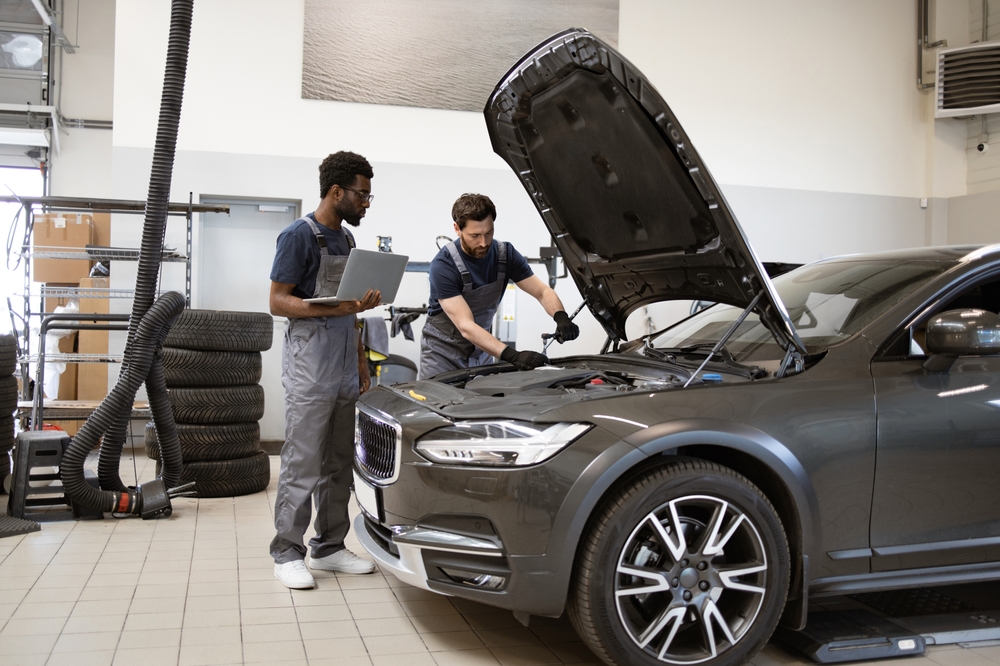
Modern automotive diagnostics increasingly combine scan-tool information, live sensor readings, electronic testing, and traditional mechanical inspection to create a clearer picture of vehicle performance. For Madison-area motorists, that can be particularly helpful when a warning light or intermittent symptom does not immediately reveal which component is responsible.
This section is based on general automotive repair trends and professional field observation rather than a Madison-specific statistical data set.
A diagnostic trouble code, for example, identifies where a vehicle’s computer detected an abnormal condition. It does not necessarily prove that a particular component should be replaced. Newer diagnostic capabilities allow technicians to examine additional information and compare electronic readings with what the vehicle is physically doing.
That distinction becomes increasingly important as vehicles gain more sensors and computer-controlled components.
How Will New Repair Technology Affect Local Drivers?
New repair technology can help local drivers receive more targeted diagnoses as vehicles become increasingly complex, potentially reducing unnecessary guesswork and helping technicians identify electronic, mechanical, and emissions-related problems more efficiently. The practical benefit is not technology for its own sake, but better information for making repair decisions.
For residents commuting between Madison, Goodlettsville, East Nashville, and downtown Nashville, vehicle reliability can directly affect work schedules and everyday responsibilities. A malfunction that causes poor performance, excessive noise, a warning light, or reduced fuel efficiency can quickly become inconvenient.
Technology can provide additional clues, but a scan result still needs interpretation. Physical inspections, testing, and technician experience remain important parts of the repair process.
What Warning Signs Should Madison Drivers Watch For?
Madison drivers should pay attention to warning lights, unusual exhaust sounds, performance changes, abnormal smells, reduced fuel efficiency, and other changes in how a vehicle operates. Modern monitoring systems can detect certain faults early, but drivers are still often the first to notice that something feels, sounds, or smells different.
Watch for:
-
A check engine or other dashboard warning light that remains illuminated.
-
New rattling, roaring, hissing, or unusually loud exhaust sounds.
-
Sluggish acceleration or noticeable loss of engine performance.
-
Rough idling, hesitation, or stalling.
-
A sudden or unexplained change in fuel economy.
-
Exhaust odors that become noticeable around the vehicle or inside the cabin.
-
Visible exhaust smoke that is unusual for the vehicle.
-
Problems that appear more frequently during hot weather, heavy traffic, or highway driving.
These symptoms can have multiple causes, so diagnosis is usually more useful than assuming a specific part has failed.
When Should You Call an Automotive Repair Professional?
Professional diagnosis is appropriate when a warning light persists, the vehicle develops significant performance problems, exhaust fumes may be entering the cabin, or a mechanical or electronic issue cannot be identified through simple owner checks. Madison drivers should also seek service promptly when a problem could affect safe vehicle operation.
Drivers can safely monitor fluid levels according to the owner’s manual, check tire condition, observe dashboard indicators, and document when symptoms occur. Recording whether a problem happens during acceleration, after the engine warms up, or in heavy traffic can provide useful diagnostic context.
DIY troubleshooting should stop when repairs involve high-voltage hybrid or EV components, complicated electronic systems, exhaust components that require specialized equipment, or conditions that could affect vehicle safety.
What Technologies Are Changing Automotive Repair?
The technologies changing automotive repair most significantly include advanced scan tools, connected diagnostics, artificial intelligence-assisted analysis, driver-assistance electronics, electrified powertrains, and increasingly sophisticated emissions controls. Madison motorists will encounter these technologies more frequently as newer vehicles become a larger share of the cars and trucks on Davidson County roads.
Advanced diagnostic scanning: Newer tools can access extensive vehicle data instead of simply retrieving basic trouble codes.
Live vehicle data: Technicians can evaluate information from sensors while a vehicle is operating, helping identify conditions that appear intermittently.
AI-assisted diagnostics: Software can increasingly help organize large amounts of diagnostic information and identify patterns. It supports troubleshooting rather than replacing hands-on testing and technician judgment.
ADAS technology: Features such as lane assistance, collision alerts, cameras, and radar introduce additional electronic systems that can require specialized procedures.
Electric and hybrid systems: Electrified vehicles add batteries, electric motors, power electronics, regenerative braking, and high-voltage safety considerations.
Advanced emissions monitoring: Modern engine and exhaust systems rely on sensors and computer controls to monitor combustion and emissions-related performance.
How Can Drivers Prepare for More Advanced Vehicles?
Drivers can prepare for increasingly advanced vehicles by following manufacturer maintenance schedules, responding to warning lights, keeping records of repairs, and avoiding parts replacement based solely on a trouble code. In Madison’s combination of urban traffic and highway driving, noticing changes early can make diagnosis easier before symptoms become more disruptive.
Pay particular attention before periods of heavy travel or extreme summer heat. If your vehicle has an intermittent issue, write down the driving conditions when it happens.
Avoid clearing diagnostic codes simply to make a dashboard light disappear. Erasing information can remove useful clues that could help a technician determine what caused the warning.
What Results Should Drivers Expect From Better Diagnostic Technology?
Better diagnostic technology should give technicians more information to work with, but it does not make every automotive problem instant or automatic to diagnose. The best result is a diagnosis supported by vehicle data, appropriate testing, physical inspection, and an understanding of how the affected systems work together.
Some problems are straightforward. Others are intermittent or involve several systems producing similar symptoms. For Madison drivers, realistic expectations matter: sophisticated equipment can narrow the search, while careful testing helps determine whether the suspected cause actually matches the vehicle’s behavior.
What Common Mistakes Should Vehicle Owners Avoid?
Vehicle owners should avoid treating diagnostic technology as a substitute for proper testing, because a code or online description rarely tells the complete story by itself. The better approach is to use electronic information as evidence and confirm the underlying problem before deciding which repair makes sense.
Mistake: Assuming a trouble code identifies a bad part.
Consequence: A functioning component could be replaced unnecessarily.
Better approach: Test the related system and determine why the code appeared.
Mistake: Ignoring an intermittent warning light.
Consequence: A developing problem may become harder or more disruptive later.
Better approach: Record when the light appears and have the condition evaluated.
Mistake: Assuming newer cars need less attention.
Consequence: Mechanical wear can still occur even when electronic monitoring becomes more sophisticated.
Better approach: Continue routine inspections and manufacturer-recommended maintenance.
What Is a Common Local Driving Scenario?
A common Madison driving scenario involves a vehicle that seems fine during short neighborhood trips but develops a warning light, hesitation, or unusual exhaust behavior during heavier traffic or highway driving. Changing speeds, engine temperatures, and operating loads can reveal problems that are difficult to reproduce while a vehicle is sitting still.
Imagine a driver leaving Madison, traveling toward Nashville on I-65, and noticing hesitation only after the vehicle has warmed up. That does not automatically identify the failed component. Live diagnostic information combined with appropriate testing can help narrow down what changes when the symptom occurs.
This is a representative local scenario, not a specific customer case study.
What Automotive Services Support Today’s Vehicle Technology?
Automotive diagnostic, engine, exhaust, muffler, and related repair services can address many problems identified through modern vehicle monitoring systems. For local motorists, the important step is matching the symptom and diagnostic evidence to the appropriate service rather than replacing components based on assumptions.
Electronic diagnostics may reveal information related to engine operation or emissions performance, while a physical inspection can identify damaged, leaking, loose, or worn mechanical components.
How Do DIY Diagnosis and Professional Diagnosis Compare?
DIY checks are useful for observing symptoms and basic vehicle condition, while professional diagnosis becomes more valuable when specialized testing, electronic data, repair equipment, or safety procedures are required. As vehicles become more technologically advanced, the dividing line between what owners can observe and what technicians need to test becomes clearer.
A driver can note noises, smells, dashboard messages, and when a symptom occurs. Professional equipment can then provide deeper information about what the vehicle’s systems are reporting.
For hybrid, electric, advanced electronic, and complicated emissions-related problems, specialized knowledge and equipment become particularly important.
What Areas Can Local Drivers Seek Service From?
Drivers in Madison and surrounding northern Davidson County communities can benefit from automotive service that understands the combination of local commuting, highway travel, and everyday stop-and-go driving. Nearby motorists may also travel from Goodlettsville, Old Hickory, Inglewood, and other communities around the Nashville metropolitan area for automotive needs.
Major routes such as Gallatin Pike, Old Hickory Boulevard, Briley Parkway, and I-65 make reliable transportation especially important for area commuters.
What Can Happen If You Ignore a Developing Vehicle Problem?
Ignoring a developing automotive problem can allow a relatively limited symptom to become a larger reliability, performance, emissions, or safety concern, depending on its cause. For Madison motorists who rely on their vehicles for regular Nashville-area commuting, waiting can also increase the chance of unexpected downtime at an inconvenient time.
Not every dashboard light means an immediate major repair. However, persistent warnings, unusual exhaust odors, major performance changes, overheating, or symptoms affecting safe operation deserve attention.
FAQ About Automotive Repair Technology in Madison
Automotive repair technology in Madison is evolving along with the vehicles on local roads, so drivers increasingly encounter computer diagnostics, advanced sensors, electrified systems, and electronically controlled components during service. These common questions explain what that shift means for local vehicle owners.
Are newer vehicles harder to diagnose in Madison, TN?
Newer vehicles can be more complex to diagnose because mechanical systems increasingly interact with computers, sensors, and electronic modules. Advanced diagnostic equipment provides more information, but technicians still need to interpret that information and perform appropriate tests before identifying the cause of a warning light or performance problem.
Does a check engine code tell me exactly what needs replacement?
No. A check engine code identifies a condition detected by the vehicle’s onboard system, but it does not automatically prove that a specific part has failed. Testing the affected system helps determine whether the issue involves a sensor, wiring, mechanical component, exhaust system, or another related condition.
Will AI replace automotive technicians?
AI is more likely to assist automotive technicians than replace the hands-on work required to inspect, test, diagnose, and repair vehicles. Software can help analyze increasingly large amounts of vehicle information, while technicians still need to verify findings and determine whether the electronic evidence matches the vehicle’s actual condition.
Are electric and hybrid vehicles changing automotive repair in Davidson County?
Yes. Electric and hybrid vehicles introduce high-voltage batteries, electric motors, power electronics, regenerative braking, and other systems that differ from conventional gasoline vehicles. As more electrified vehicles operate throughout Davidson County, proper equipment, procedures, and training become increasingly relevant to automotive service.
Does Nashville-area traffic affect vehicle diagnostics?
Traffic conditions can help reveal certain vehicle problems because stop-and-go operation creates different engine loads and temperatures than steady highway travel. A Madison commuter may notice rough idling, hesitation, or another symptom in congestion even when the same vehicle appears normal during a short, uninterrupted trip.
Should I clear a warning light before bringing my car in?
Usually, it is better not to erase diagnostic information before having an unexplained warning investigated. Stored codes and related vehicle data can provide useful clues about what happened. Madison drivers can also help by noting when the warning appeared and what the vehicle was doing at the time.
Can modern diagnostics find exhaust and emissions problems?
Modern diagnostics can provide important information about electronically monitored engine and emissions systems, but physical inspection may still be necessary. Sensors can identify abnormal operating conditions, while hands-on evaluation may be needed to locate leaks, damaged exhaust components, unusual noises, or other mechanical problems.
What should Madison drivers do when a vehicle problem is intermittent?
Madison drivers should document when the symptom occurs, including whether the engine is hot or cold, the vehicle’s approximate speed, traffic conditions, and any dashboard messages. Intermittent problems can be difficult to reproduce, so those details combined with stored and live diagnostic data can make troubleshooting more focused.
Stay Ready for the Next Generation of Automotive Repair
Automotive technology will continue changing, but the basic goal of repair remains the same: understand what the vehicle is doing, identify the cause of the problem, and choose an appropriate solution. For Madison-area drivers, combining modern diagnostic capabilities with careful mechanical inspection can help keep increasingly sophisticated vehicles ready for local roads.
Keep Your Vehicle Ready for Madison Roads
Get clear information about your vehicle’s symptoms before a small concern becomes a bigger disruption. We can help you explore the appropriate diagnostic, exhaust, muffler, or automotive repair options for your vehicle.
Categorised in: Automotive Repair Service, Blog
This post was written by admin
Comments are closed here.